
 Sightseeing
Discovering Knossos: The Majestic Minoan Palace
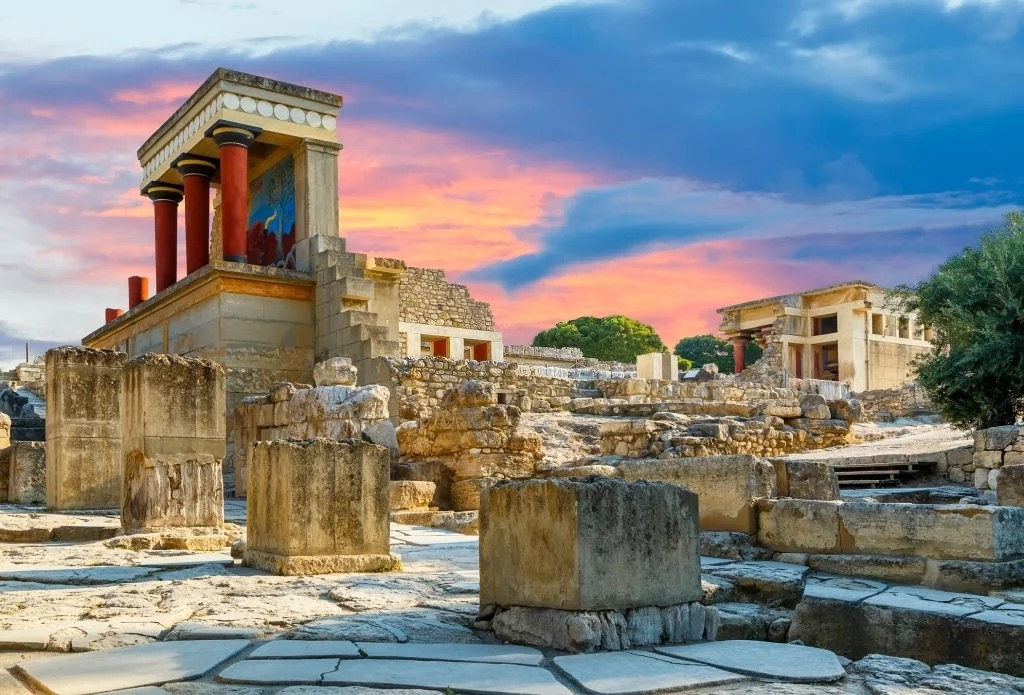
Knossos, located near Heraklion on the island of Crete, is one of the most significant archaeological sites in Greece and a must-visit for anyone interested in ancient history. As the largest Bronze Age archaeological site on Crete and considered Europe’s oldest city, Knossos offers an unparalleled glimpse into the advanced Minoan civilization. Known for its impressive palace complex, intricate frescoes, and rich mythology, Knossos stands as a testament to the ingenuity and sophistication of the ancient Minoans.
Historical Significance
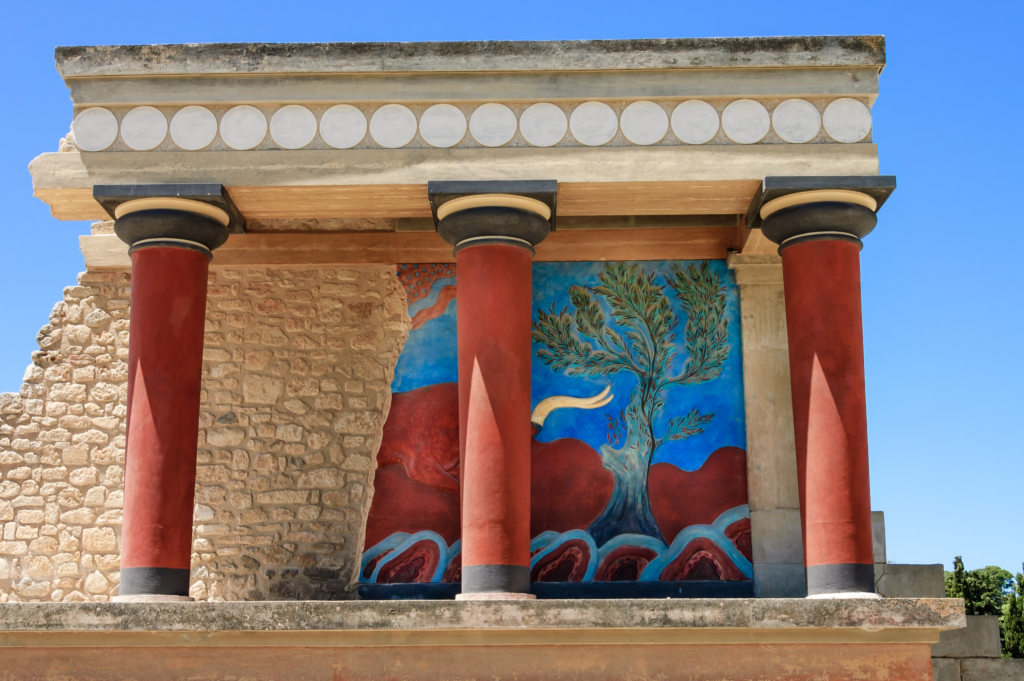
Knossos is the legendary site of the ancient Minoan civilization, which thrived from approximately 2000 to 1400 BCE. The site is most famous for its grand palace, which served as the political, ceremonial, and economic center of Minoan life. The palace complex is believed to have housed the mythical King Minos and is famously associated with the legend of the Minotaur and the labyrinth. According to myth, the labyrinth was an elaborate maze designed by the architect Daedalus to contain the Minotaur, a creature with the body of a man and the head of a bull.
The palace at Knossos, covering around 20,000 square meters, was a multi-storied structure featuring advanced architectural techniques. It included elaborate residential quarters, ceremonial halls, storage rooms, workshops, and courtyards, all connected by a complex network of corridors. The design and construction of the palace demonstrate the Minoans’ advanced understanding of engineering and urban planning.
The Palace Complex
The palace complex at Knossos is a labyrinthine arrangement of rooms and spaces that reflect the complexity and sophistication of Minoan society. Key areas of interest within the palace include:
- The Throne Room: This room features a gypsum throne and benches, thought to have been used for ceremonial purposes. The room is adorned with frescoes depicting griffins, mythical creatures associated with the Minoan royalty.
- The Central Court: The heart of the palace, the Central Court was likely used for public gatherings, religious ceremonies, and administrative functions. Its open space and strategic location allowed for the accommodation of large groups.
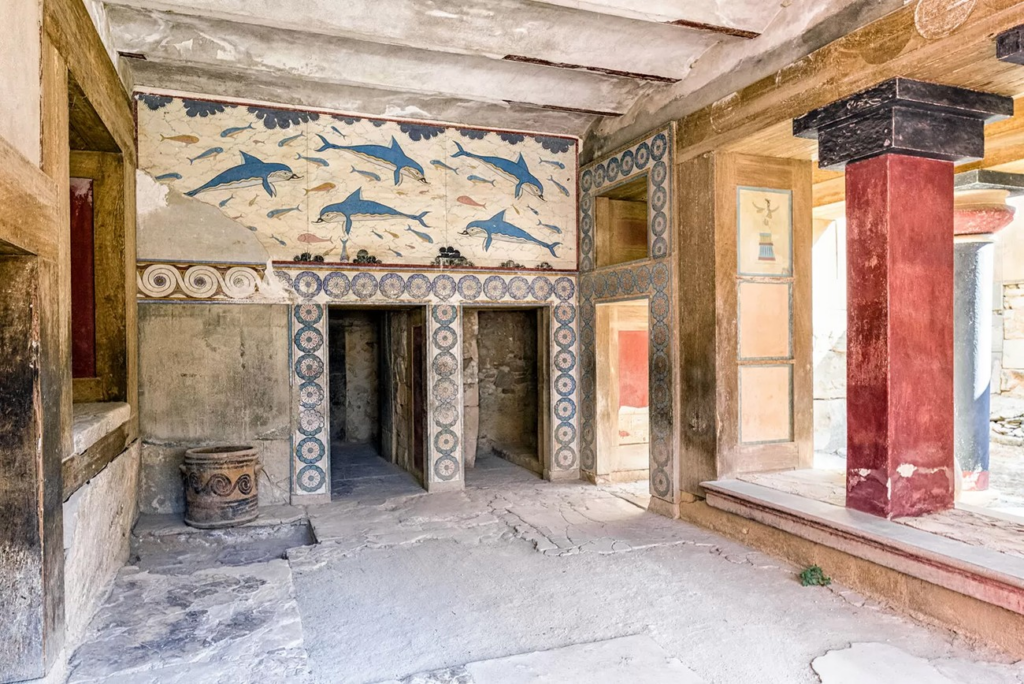
- The Queen’s Megaron: Known for its beautiful frescoes, including the famous “Dolphin Fresco,” this area was likely the private quarters of a high-ranking female figure, possibly the queen.
- The Grand Staircase: An architectural marvel, the Grand Staircase connected the various levels of the palace and showcased the Minoans’ advanced building techniques.
The Frescoes
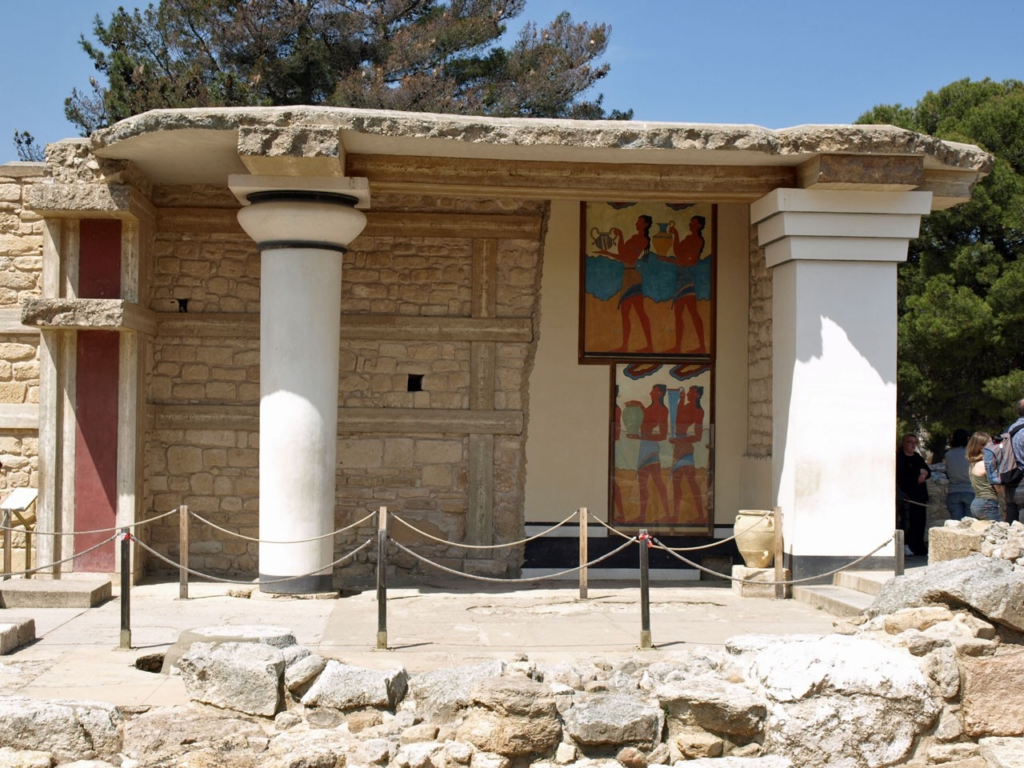
Knossos is renowned for its vibrant frescoes, which provide valuable insights into Minoan culture, religion, and daily life. These wall paintings depict a variety of scenes, including religious rituals, processions, and nature. The most famous frescoes include the “Bull-Leaping Fresco,” which illustrates a ritual sport involving acrobatic feats with bulls, and the “Prince of the Lilies,” believed to represent a priest or king adorned with a crown of lilies.
Archaeological Discoveries
The archaeological significance of Knossos was first brought to light by British archaeologist Sir Arthur Evans, who began excavations in the early 20th century. Evans’ work uncovered the extensive remains of the palace and many artifacts, providing crucial insights into Minoan civilization. His reconstructions of parts of the palace, though sometimes controversial, have helped visitors visualize the grandeur of the ancient site.
Visiting Knossos
Knossos is located just a few kilometers south of Heraklion, making it easily accessible for visitors. The site is open to the public, with guided tours available to provide detailed information about its history and significance. The nearby Heraklion Archaeological Museum houses many of the artifacts discovered at Knossos, including pottery, jewelry, and the famous Phaistos Disc, offering a comprehensive view of Minoan culture.
Practical Information
Visitors to Knossos should wear comfortable walking shoes and bring water, especially during the hot summer months, as the site requires extensive exploration. There is an entrance fee, with discounts available for students and seniors. The site is equipped with explanatory signs and diagrams, but a guided tour can enhance the experience by providing deeper insights into the history and archaeology of Knossos.
Conclusion
Knossos is a captivating destination that brings the ancient Minoan civilization to life. Its grand palace, intricate frescoes, and rich mythology offer a fascinating journey into the past, showcasing the advanced culture and achievements of the Minoans. Whether you are exploring the labyrinthine corridors of the palace, admiring the detailed frescoes, or learning about the site’s storied history, Knossos promises an enriching and unforgettable experience. For anyone visiting Heraklion, a trip to Knossos is an essential part of discovering the rich heritage and enduring legacy of Crete’s ancient inhabitants.